Among
all input devices, the keyboard plays a central role in executing
commands quickly and accurately. This leads to a recurring question: do mechanical keyboards improve gaming performance, or are they simply a preference?
To answer this properly, it is necessary to examine how a mechanical keyboard differs from a standard computer keyboard, and why it is often preferred over conventional designs in both gaming and professional environments.
1. Mechanical Keyboards vs Traditional Computer Keyboards
A standard computer keyboard
typically uses a rubber dome membrane system. When a key is pressed,
the dome collapses and completes an electrical circuit. While
cost-effective, this structure introduces variability in actuation force
and response timing.
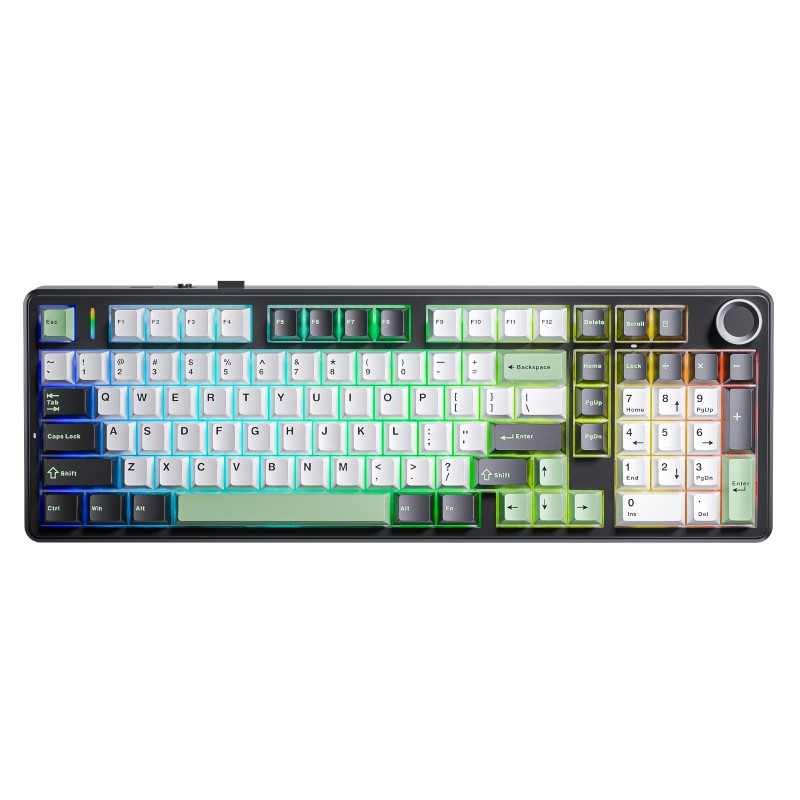
In contrast, a mechanical keyboard
uses individual mechanical switches for each key. Each switch operates
independently with a defined actuation point and consistent travel
behavior.
Key differences include:
More precise actuation point control
Higher consistency across all keys
Longer operational lifespan
More predictable key feedback
These characteristics directly influence input reliability during gameplay.
2. Do Mechanical Keyboards Improve Gaming Performance?
The
impact of a mechanical keyboard on gaming performance is not about
increasing player skill. Instead, it improves input efficiency and
consistency, which are critical in fast-paced competitive scenarios.
2.1 Input Speed and Responsiveness
Mechanical
switches typically register input more consistently at the actuation
point. This reduces hesitation between key press and in-game response,
which is particularly important in esports titles where reaction windows
are extremely short.
2.2 Input Accuracy
Gaming
often requires simultaneous or rapid sequential key presses. Mechanical
switches provide clearer tactile or linear feedback, reducing the
likelihood of mispresses compared to membrane designs.
2.3 Consistency Under Load
During
extended gaming sessions, membrane keyboards may show inconsistency due
to material fatigue. Mechanical switches maintain stable actuation
characteristics over long-term use, supporting sustained performance.
2.4 Reduced Cognitive Friction
Clear
physical feedback allows the player to develop more reliable muscle
memory. Over time, this reduces cognitive load and allows more focus on
strategy and reaction rather than input uncertainty.
3. Mechanical Keyboard vs Gaming Keyboard
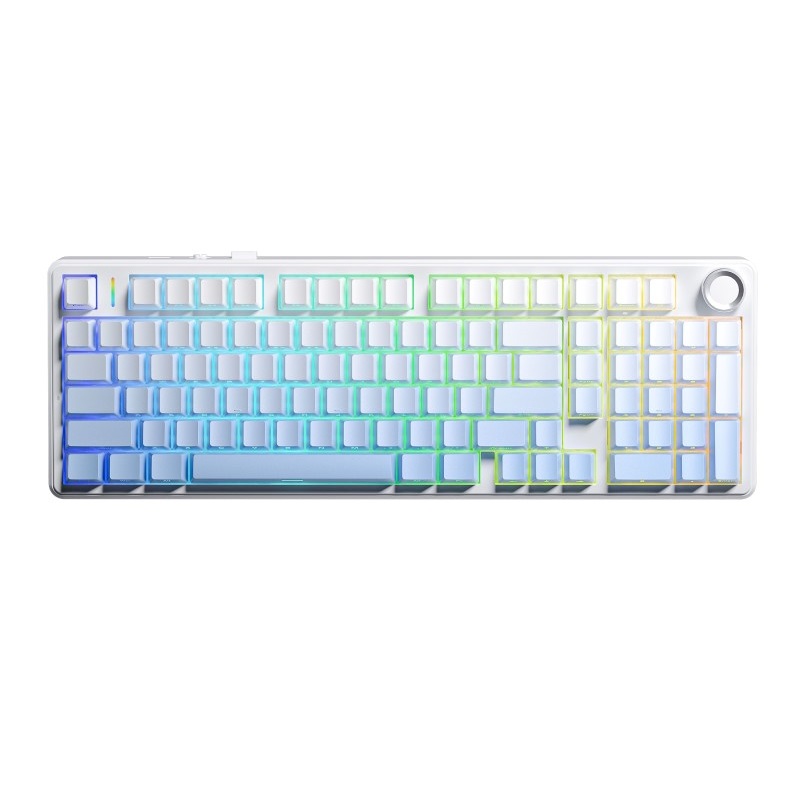
The terms mechanical keyboard and gaming keyboard are often used interchangeably, but they refer to different concepts.
Most modern gaming keyboards are mechanical, but not all mechanical keyboards are optimized for gaming.
A true gaming keyboard typically includes:
Low latency signal processing
Anti-ghosting and N-key rollover
Software customization
Ergonomic design considerations
In advanced models, these characteristics are combined into a single device that also serves as an ergonomic keyboard, supporting long-term comfort during extended use.
4. Example: AULA 99Pro Customized Mechanical Keyboard
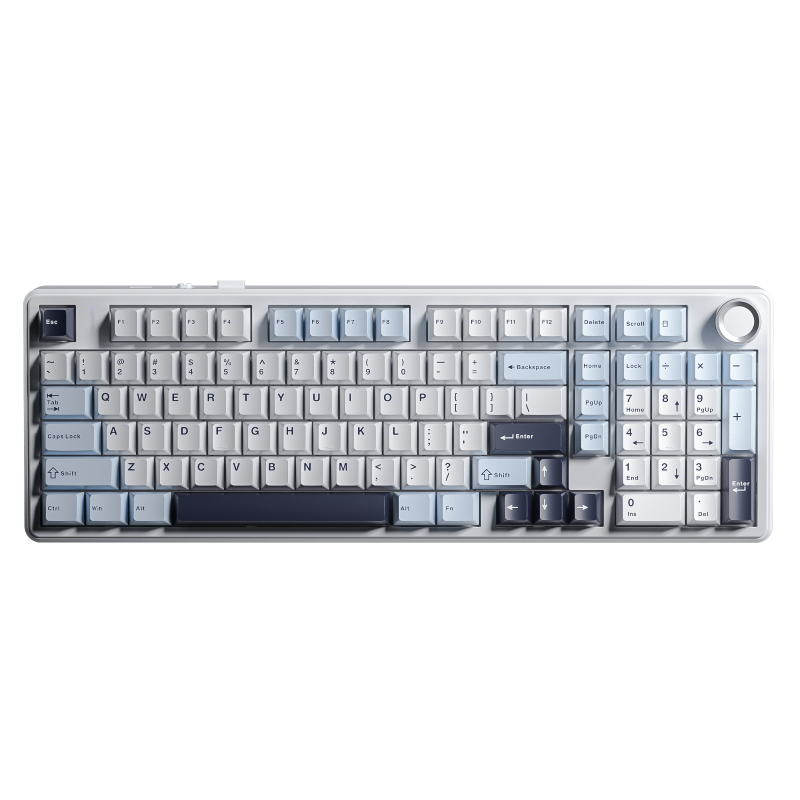
The
AULA 99Pro customized mechanical keyboard is designed to bridge gaming
performance and everyday usability. It integrates mechanical precision
with modern structural and connectivity enhancements.
Key Specifications
Wireless tri-mode connectivity: BT / 2.4G / wired
Gasket-mounted structure for improved typing feel and reduced vibration
Fully hot-swappable switches for customization and maintenance flexibility
98% compact layout balancing space efficiency and full functionality
Designed for gaming, esports, and office productivity environments
Performance Implications
The
gasket structure improves keystroke stability and reduces harsh
bottom-out impact, which supports both accuracy and long-session
comfort. Hot-swappable support allows users to fine-tune switch behavior
based on game type or personal preference, enhancing adaptability.
Tri-mode
connectivity ensures stable performance across platforms, whether used
in competitive gaming or multi-device office workflows.
5. Are Mechanical Keyboards Worth It for Gaming?
From
a performance perspective, mechanical keyboards offer measurable
advantages in consistency, responsiveness, and durability. These factors
do not guarantee improved skill, but they create a more stable input
environment, which is critical in competitive gaming.
For
players engaged in esports or fast-paced genres, the benefits become
more noticeable due to repeated high-intensity input demands. In this
context, a well-designed gaming keyboard contributes directly to
execution reliability.
Conclusion:
Mechanical
keyboards do not directly enhance gaming ability, but they
significantly improve input consistency, response reliability, and
long-term usability. These factors collectively support better in-game
execution, especially in competitive environments.
When
combined with modern engineering features such as gasket structure,
hot-swappable switches, and multi-mode connectivity, devices like the
AULA 99Pro customized mechanical keyboard represent a mature category of
gaming hardware that also functions effectively as an ergonomic
keyboard and professional computer keyboard.
For
serious gamers, the decision is less about preference and more about
optimizing the input foundation on which performance is built.