
AULA BOX63: How Linear Switches and Five-Layer Acoustic Tuning Shape the Typing Experience
A mechanical keyboard can feel great when you first try it. The real test comes after a few hours of typing or gaming.
Does each keypress still feel smooth? Does the keyboard sound satisfying without becoming distracting? And does the typing experience remain comfortable when you're using it every day?
These details are easy to overlook when comparing specifications, but they make a real difference in how a keyboard feels over time.
The AULA BOX63 mechanical keyboard brings these elements together through its linear switches and five-layer acoustic structure. Rather than focusing on the switch alone, the BOX63 also considers how the keyboard's internal components influence sound, vibration, and the feel of each keystroke.
For users who care about both smooth key travel and a refined keyboard sound, that combination is worth a closer look.
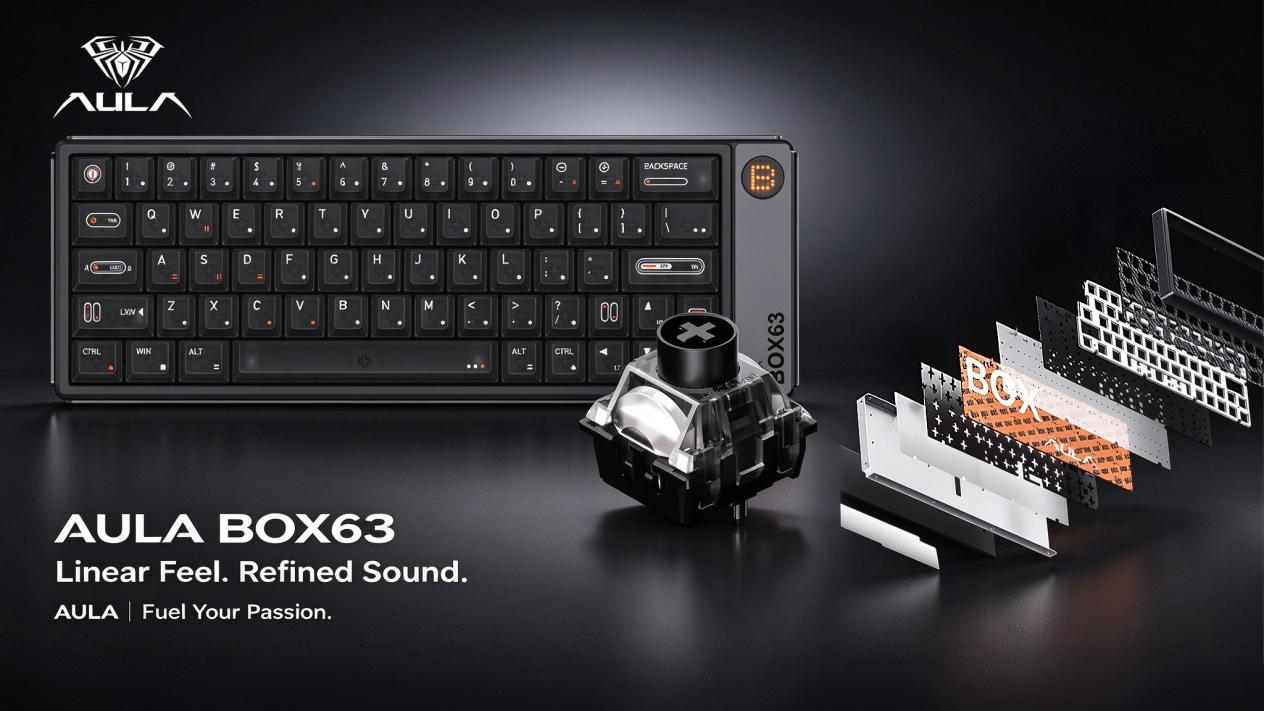
Smooth Linear Switches for Gaming and Typing
The defining feature of a linear switch keyboard is its consistent movement. Unlike tactile switches, which have a noticeable bump, or clicky switches, which produce an intentional click, linear switches move smoothly through the keystroke.There is no pronounced tactile interruption. The key travels down, registers the input, and returns, creating a straightforward and consistent feel.
For gaming, this smooth key travel can feel natural during repeated movements and rapid inputs. For everyday typing, it offers a fluid experience for users who prefer uninterrupted movement over a noticeable tactile response.
Of course, switch preference is personal. Some users enjoy the feedback of tactile switches, while others prefer the cleaner movement of linear switches. The AULA BOX63 is designed for the latter group, particularly users who want a consistent feel across gaming and daily work. But smooth movement is only one part of the experience. The sound produced when a key returns or reaches the bottom of its travel also shapes how a mechanical keyboard feels to use.
Why Keyboard Sound Depends on More Than the Switch
When people compare mechanical keyboards, switch type often gets most of the attention. Yet two keyboards with similar switches can sound noticeably different. The reason lies in the rest of the structure.
The keycaps, positioning plate, PCB, case, and internal acoustic materials all influence how vibration travels through the keyboard. Their interaction can affect resonance, the character of the bottom-out sound, and whether individual keystrokes sound sharp, hollow, or more controlled.
This is where the AULA BOX63 keyboard takes a more complete approach. Its internal acoustic tuning uses five layers of materials to help manage the sound and vibration generated during typing.
The aim isn't simply to make the keyboard quieter. It's to create a more balanced sound profile, with less unwanted resonance and a more composed response as the keys are pressed. For users who pay attention to keyboard acoustics, these small differences can make everyday typing more enjoyable.
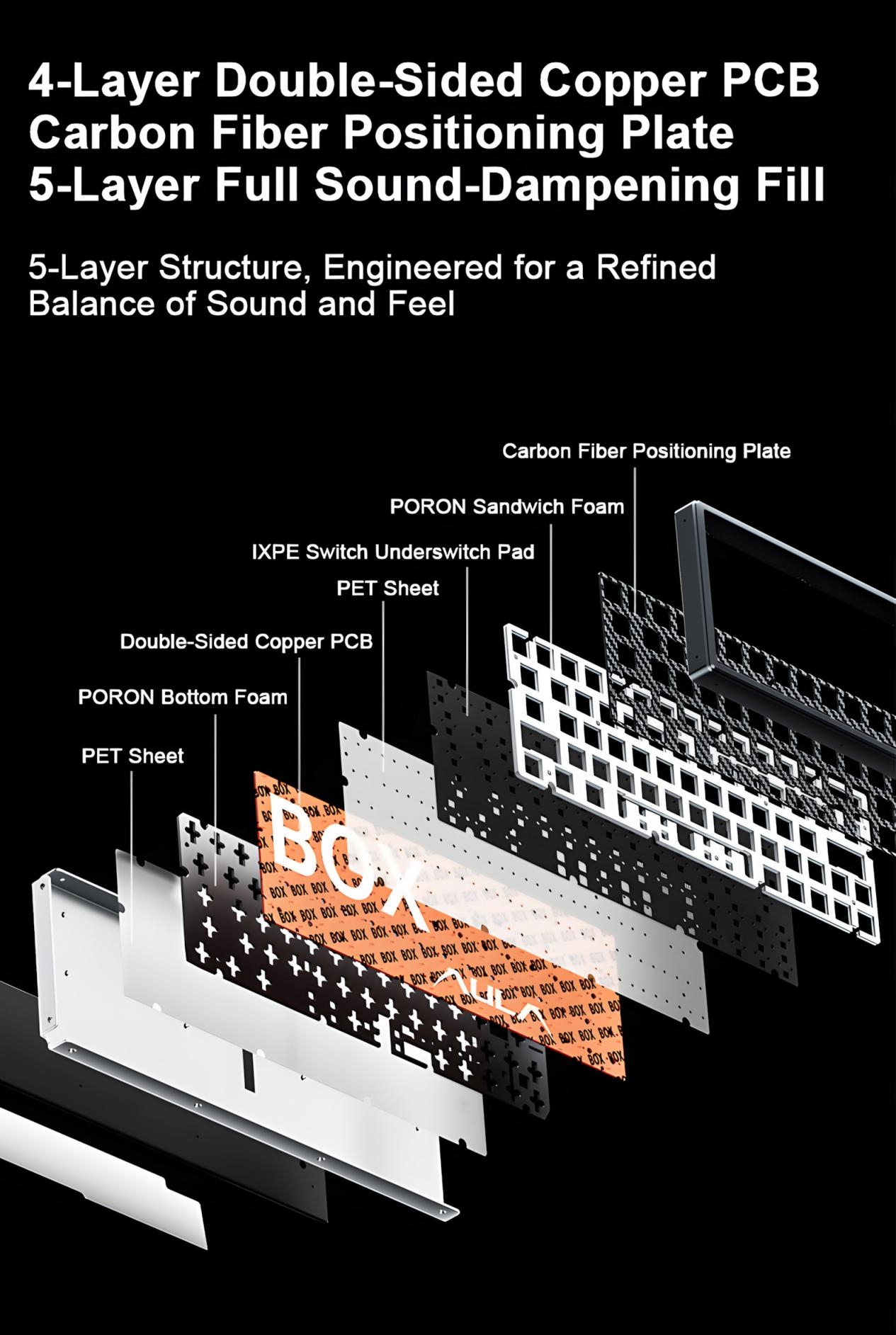
Inside the AULA BOX63: Five Layers of Acoustic Tuning
The AULA BOX63 features five internal layers designed to contribute to its acoustic performance:
Carbon Fiber Positioning Plate
PORON Sandwich Foam
IXPE Switch Underswitch Pad
PET Sheets
PORON Bottom Foam
Each layer occupies a different part of the keyboard's internal structure. Together, they help manage the vibration generated by keypresses and influence how sound moves through the keyboard.
The carbon fiber positioning plate provides the switch-mounting foundation. The PORON sandwich foam, IXPE switch pad, and PET sheets form part of the internal acoustic arrangement, while the PORON bottom foam helps address resonance within the lower case area.
The overall result depends on how these materials work together rather than on any single layer in isolation.
That distinction matters. A deeper sound isn't automatically a better sound, and adding foam doesn't guarantee a particular acoustic character. What matters is how well the keyboard controls unwanted resonance while preserving a satisfying response. For the BOX63, the five-layer design supports its focus on a more controlled mechanical keyboard sound and a more considered typing experience.
A More Refined Sound During Everyday Use
The difference between a keyboard that sounds hollow and one that sounds more controlled often becomes clearer during regular use.
A quick test at a store or desk might tell you whether you like the initial sound. Longer sessions reveal more: how the keys sound when you type quickly, how the bottom-out feels, and whether the overall sound becomes distracting in a quiet room.
The BOX63 brings its linear switches and acoustic materials together to address these parts of the experience.
The linear switches provide consistent key travel, while the internal layers help shape the sound produced by each press. Rather than relying on one component to define the entire keyboard, the design considers how the switch and internal structure interact.
The sound you prefer will still depend on your typing force, keycaps, desk surface, and personal taste. Even so, paying attention to acoustic tuning helps explain why the construction of a keyboard matters alongside its switch type. For people who spend long hours at a keyboard, that balance between movement and sound can be just as important as the specifications on the product page.
Is the AULA BOX63 the Right Linear Switch Keyboard for You?
The AULA BOX63 is worth considering if you prefer smooth linear switches and pay attention to how a mechanical keyboard sounds during use.
It may suit users who:
Prefer consistent key travel without a pronounced tactile bump.
Want a keyboard for both gaming and everyday typing.
Care about bottom-out sound and unwanted case resonance.
Consider internal acoustic construction when comparing mechanical keyboards.
If you prefer a distinct tactile bump or an audible click with every press, another switch type may better match your preferences. Choosing a keyboard is ultimately about finding the combination of feel and sound that works for you.
For linear-switch fans, however, the BOX63 offers a clear design focus: smooth key movement supported by a five-layer acoustic structure.
Final Thoughts
A good mechanical keyboard is about more than the switches installed beneath its keycaps. The internal structure also plays an important role in shaping the sound and feel of every press.
With its linear switches and five-layer acoustic tuning, the AULA BOX63 brings these two aspects together. Its design focuses on consistent key travel and a more controlled sound, giving users another reason to look beyond switch specifications when choosing a keyboard.
If smooth movement and considered keyboard acoustics are high on your list, the BOX63 is a model worth exploring.
AULA BOX63 — Smooth at the press. Refined in every keystroke.
AULA | Fuel Your Passion